
On Writing Yourself into Existence
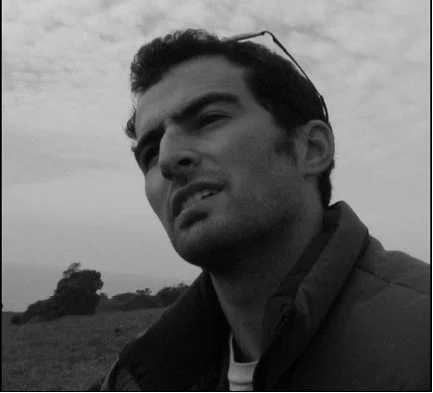
Me with my head in the clouds, c. 2005.
Growing up, everyone called me Jacob, even though I was named for my great-grandpa Jack, who was technically also a Jacob. How come he got the cool nickname, and I was stuck with the Biblical name that, like orange, rhymes with nothing? I was one of only two Jacobs in my entire junior high school, which is remarkable because the name made a comeback around the turn of the millennium, when it held the title of most popular male baby name in the United States for a few consecutive years. Jacob became cool, along with its many variations: Jake, Kobe, Jack, Jackson, Jacobi. But when I was a child, it was decidedly not cool.
All that changed in the tenth grade when I started writing for the high school newspaper, and I chose the name “Jake Dorman” to run as my byline at the head of each story. I well remember the pride I felt when I saw that new name, my self-given name, on the front page of the newspaper. And with that simple act, everyone started to call me Jake, not Jacob. Even my own mother adopted the new moniker.
Writing for the newspaper taught me how to write in many ways, by giving me ample opportunity to do so, and by giving me constant editorial input from the upperclassmen who assigned and edited my stories. I remember how much easier it became to write school papers after I got the hang of banging out newspaper stories each week. And then, I used my full name when I published my dissertation, and in so doing, earned the status of a Doctor of Philosophy, or Ph.D. When I published that dissertation and my subsequent books, I dusted off the old name and added a middle initial for added gravitas: “Jacob S. Dorman.”
And so, at two crucial stages of my writing career, I literally wrote myself into existence, beginning with my name. But in a larger sense, we all write ourselves into existence whenever we publish anything under our own name.
When I started to publish scholarship, my name appeared in thousands of copies of journals and thousands of dust jackets, and circulated among a small group of hundreds of scholars who cared about my particular subfield of history, and perhaps thousands of readers who read about my books in Harper’s or The Wall Street Journal or The Journal of American History. At that point, my formal name became a kind of shield behind which I protected my personal identity. My friends still called me Jake, but those who did not know me as well, or did not know me at all, knew me only as Jacob.
Since my publications allowed me to become and then remain a professor, my writing became a source of subsistence, not just existence. It was quite literally the vehicle that put food on the table, that provided not just for me but for my family. My experience is not unique; in fact, I’d argue, we all write ourselves into existence. In the before times, we did so in letters to friends and loved ones. We courted by mail, we formed and reinforced friendships by mail, we created our sense of self, our interior lives, by journaling. Now we are perhaps approaching a post-literary era, when children and young adults communicate with emojis and memes, and even text messages have lost the literary potential they once had. Remember when people wrote novels by tweet? Those were more innocent times.
But we authors still write ourselves into existence. It is what we put down on paper, or PDF, or Kindle, or screen that defines who we are and what we stand for. It is how we are measured and assigned a particular rank in particular worlds, such as romance writers, “serious” nonfiction authors, or scholars of one kind or another. It may feel like we are writing for tiny audiences, that only a few dozen peers and their graduate students care about what we write, and that may be true, to some degree. But publication is also a form of immortality, a marker in time that will live long after we are, with John Brown, a-mouldering in the grave.
And so, dear reader, I will leave you with this final thought: we write ourselves into existence, but we never do so alone. What we write is the product of dozens of teachers and the thousands of books, newspapers, street signs, websites, cereal boxes, sports sections, and everything else we read. If you are like most writers, you read obsessively, as I did, long before I put fingers to a keyboard and started to name and rename myself. All writers need peers. All writers need editors. All writers need input. When I think of how I have succeeded as a writer, and the extent to which I have failed, the presence of peer and editorial input is a crucial factor in my success, and its absence a crucial factor in my failure.
So, as you go forth and write yourself into existence today, and hopefully many days to come, I hope you will share what you write with the world. And when you write for publication, may you be so fortunate as to find readers and editors who will take what you write, and, gently and skillfully, help your writing to blossom into something even better than you could achieve on your own, so that the version of yourself that you convey in your publications is wiser and more artful than you could ever hope to be. In this era of art in an age of digital reproduction, what we publish will live on in perpetuity, as long as there are data centers to hold our words in the very terrestrial “cloud.” Writing is not heaven, but it is the closest we will ever get in this lifetime and perhaps long after we are gone.
